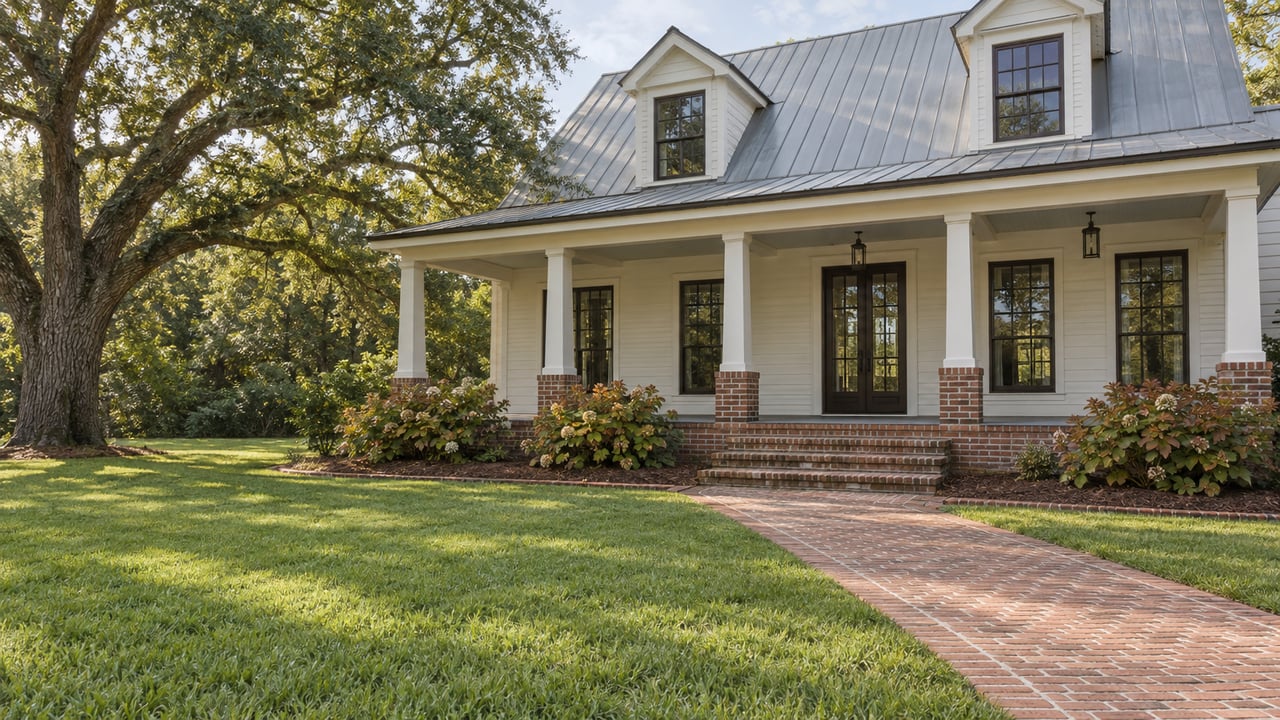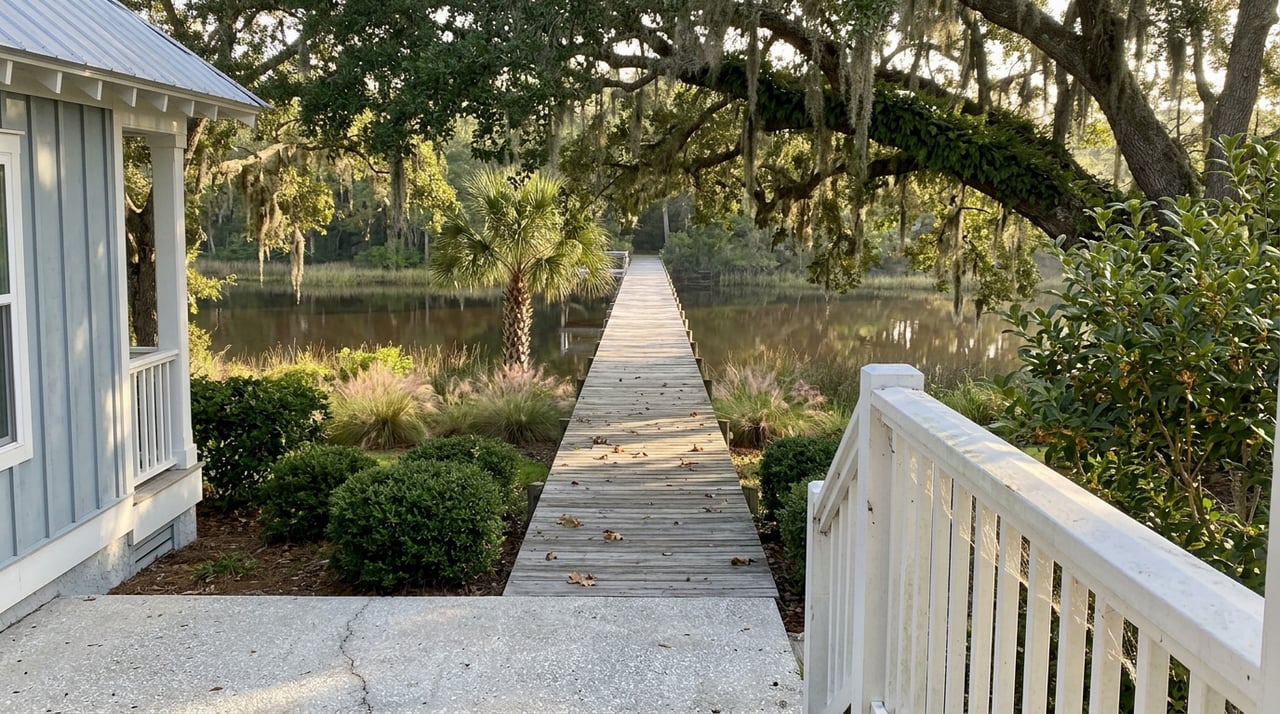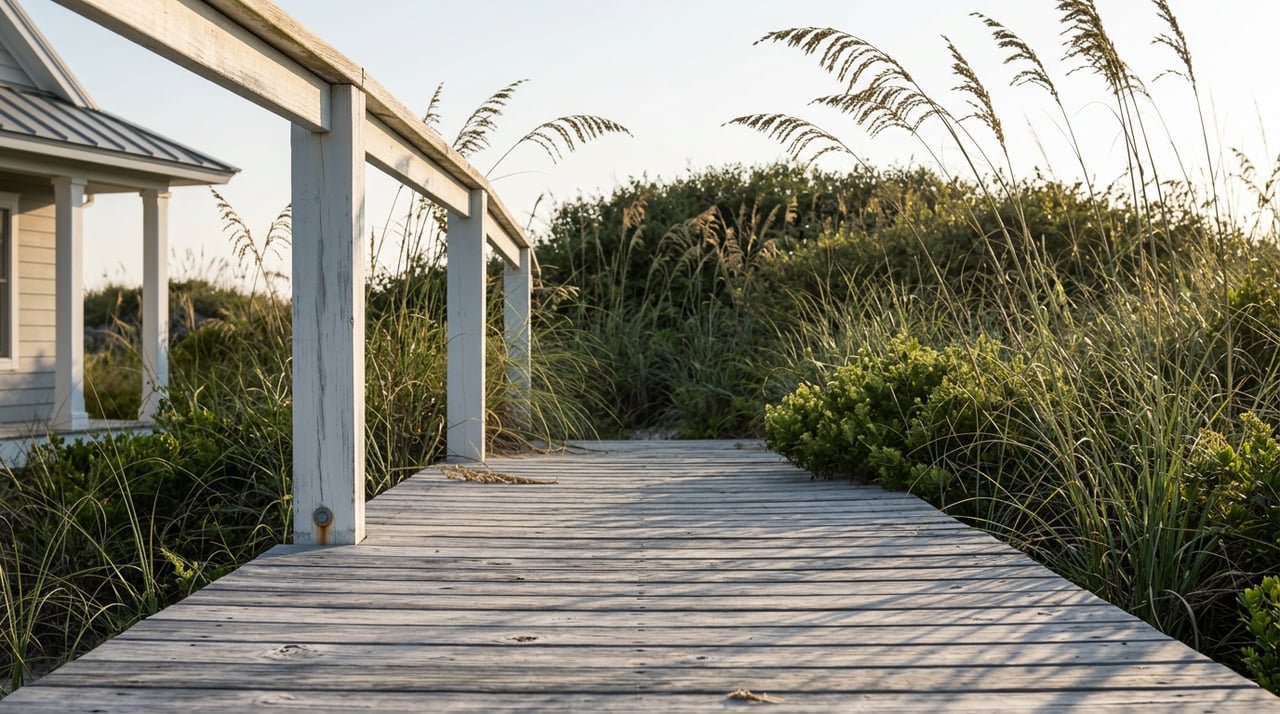
The photo shows exactly what you'd expect from a Sea Pines beach lot: weathered gray boards running from a screened porch, over the dune grass, straight to the sand. It looks like part of the house. In the listing, it practically is the house, the feature that justifies the price.
It isn't part of the house. That boardwalk is a detail worth raising before you buy. Sea Pines actually maintains a separate, named procedure for real estate closings involving encroachments, called the Process for Encroachment Request for Real Estate Closings, distinct from the standard encroachment process and the one used for structures abutting a body of water. If your agent hasn't mentioned it, that's the gap this post is here to close.
The Boardwalk's Encroachment Process Matters
Sea Pines CSA manages the common property throughout the community, including beach access walks and beachfront trust land. Any private structure that crosses that land, a boardwalk, a dock, a set of stairs down to the beach, sits there under what the association calls an encroachment agreement. The CSA's own governing documents list four distinct versions of this process: a standard encroachment request, one specifically for structures abutting a body of water, one for boardwalk construction approval, and one built specifically for real estate closings.
That last one exists because CSA has apparently seen enough transactions go sideways over exactly this issue that they built a dedicated lane for it. An encroachment agreement is worth addressing as part of the sale, which means someone, ideally your agent, should raise it before you're past your due diligence period, not after.
What Happens When the Boardwalk Doesn't Survive a Storm
The version of this problem that catches people off guard isn't the paperwork at closing. It's what happens after the closing, when a named storm does what named storms do to a wooden structure sitting on dune sand.
The Sea Pines Forest Preserve Foundation's Beach Trust Policy is specific: if a boardwalk is destroyed or judged a safety hazard, it cannot be rebuilt without the Foundation's advance approval and a new encroachment agreement. That's the rule in normal times. Following Hurricane Matthew, the Foundation went further and paused issuing new encroachment agreements altogether while dune restoration planning was underway, leaving beachfront owners unable to simply replace what the storm took, even with intent to rebuild identically.
Whether that specific pause is still in effect is a question worth asking CSA directly rather than assuming either way. What matters for a buyer is that the mechanism exists at all. If a hurricane damages a stretch of the Sea Pines beachfront again—and on a barrier island, that's a when rather than an if—an owner who assumes a damaged boardwalk is simply a maintenance item, replace like for like, can find themselves waiting on an agency timeline instead of a contractor's schedule.
Here's what that means for the CSA's own multi-track encroachment system in practice:
| Process | When it applies | What it resolves |
|---|---|---|
| Standard encroachment request | A structure or improvement encroaches on common property under normal circumstances | Review of the encroachment request |
| Encroachment request abutting a body of water | The encroachment involves a lagoon, marsh, or waterfront common area | Water-adjacent placement and setback concerns |
| Boardwalk construction approval | Building a new boardwalk or replacing a damaged one | Design and construction sign-off, tied to Beach Trust Policy review |
| Real estate closing process | Ownership of a property with an existing encroachment is transferring | Addressing the existing encroachment during the real estate closing |
Four separate processes for what most buyers assume is a single, settled fact about the property they're purchasing.
The ARB Adds Its Own Review
Even setting the boardwalk aside, any exterior change to a Sea Pines home, additions, pools, generators, retaining walls, goes through the Sea Pines Architectural Review Board before a building permit is pulled. The ARB's process includes formally notifying property owners within 100 feet of the proposed work, who then get a set window, ten days, to review the application and file objections if they have any.
That's not a rubber stamp with a delay attached. It's a real review period built into the timeline, and it applies whether you're planning a pool for next spring or trying to replace storm damage this fall. If you're buying with renovation plans already in mind, the ARB clock is worth building into your calendar from day one, not discovering after you've already scheduled a contractor.
Oceanfront Comes With a Second Rulebook
If the home you're looking at sits where its lights are visible from the beach, a second layer of regulation applies on top of anything CSA or the ARB requires, and this one comes from the Town of Hilton Head Island rather than the community association. Between May 1 and October 31, sea turtle nesting season, any lighting on a structure visible from the beach has to be off or shielded from 10 p.m. until dawn. Windows that face the beach need to be covered with drapes or shade screens during those hours if the interior light would otherwise spill onto the sand. Violations carry a fine of $1,000.
For a buyer planning to add exterior lighting, expand a porch, or install larger glass facing the ocean, that ordinance shapes the design conversation before the ARB even gets involved. It's a fixed, dated rule, not a suggestion, and it runs on the town's calendar regardless of what CSA or the Forest Preserve Foundation decide about your boardwalk.
What to Ask Before You Write the Offer
None of this means a beachfront or lagoon-front Sea Pines property is a bad buy. It means the improvements you're seeing in the listing photos come with obligations that live outside the purchase agreement. Before you get too far into the process, it's worth asking:
- Is the boardwalk, dock, or beach access structure covered by a current encroachment agreement, and what does the agreement say about the existing structure?
- Has the structure ever been damaged and rebuilt, and if so, was a new encroachment agreement issued at that time?
- If the structure were destroyed today, is the Forest Preserve Foundation currently issuing new encroachment agreements, or is there an active dune restoration or beach management discussion that could delay rebuilding?
- If you're planning any exterior renovation, have you checked the ARB process before scheduling work?
- If the home is oceanfront, does your renovation plan account for the Town's lighting and window-covering requirements during turtle season?
A seller's disclosure won't necessarily surface all of this. It's the kind of detail that shows up when someone who works this market every day asks the right question at the right point in a transaction, not after.
A Few Questions Buyers Ask
Does every Sea Pines beachfront home have this issue, or just some? Any private structure crossing CSA or Forest Preserve Foundation common property, most commonly a boardwalk or beach access walk, is the kind of improvement this applies to. Interior lots without shared-land crossings generally aren't affected in the same way.
Can I just rebuild a damaged boardwalk myself without going through CSA? No. The Beach Trust Policy is explicit that boardwalks judged destroyed or hazardous can't be rebuilt without the Foundation's advance approval and a new encroachment agreement, regardless of who's paying for the work.
Does the turtle lighting ordinance apply year-round? No. It runs May 1 through October 31, which covers nesting and hatching season, and applies specifically to lighting and windows visible from the beach.
Buying beachfront property in Sea Pines is still one of the strongest lifestyle plays on Hilton Head Island, and the boardwalk, the dune access, the ocean view from the porch, are exactly what make it worth the price. Understanding who actually controls that access, and under what terms, just means you're negotiating with full information instead of finding out after closing. If you're evaluating a specific property and want someone to walk the encroachment history and ARB process with you before you write an offer, the Lynne Anderson Luxury Team is happy to help. Schedule a free consultation and we'll go through it together.
This article is general information, not legal, tax or financial advice. Consult a qualified professional about your situation.